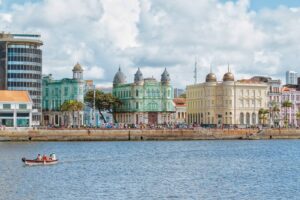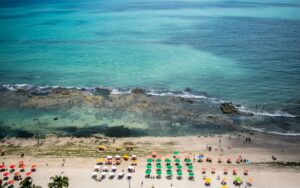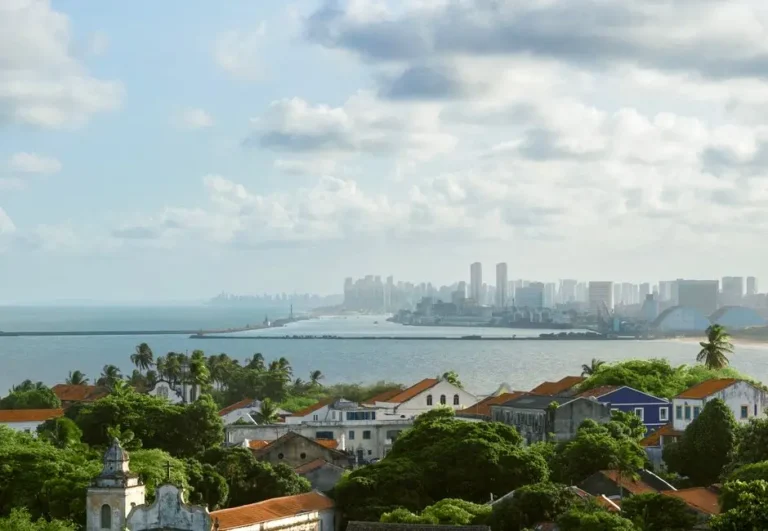
De fato, Recife é conhecida como a “Veneza Brasileira” por seus rios, canais e pontes que cruzam a cidade como uma teia de águas. Enquanto Veneza na Itália é famosa por suas gôndolas e canais artificiais, Recife tem uma rede natural de rios e manguezais que tornam a cidade única no Brasil. Se você nunca ouviu falar dessa faceta de Recife, então este guia vai revelar por que a cidade merece esse apelido e quais pontos você precisa conhecer.
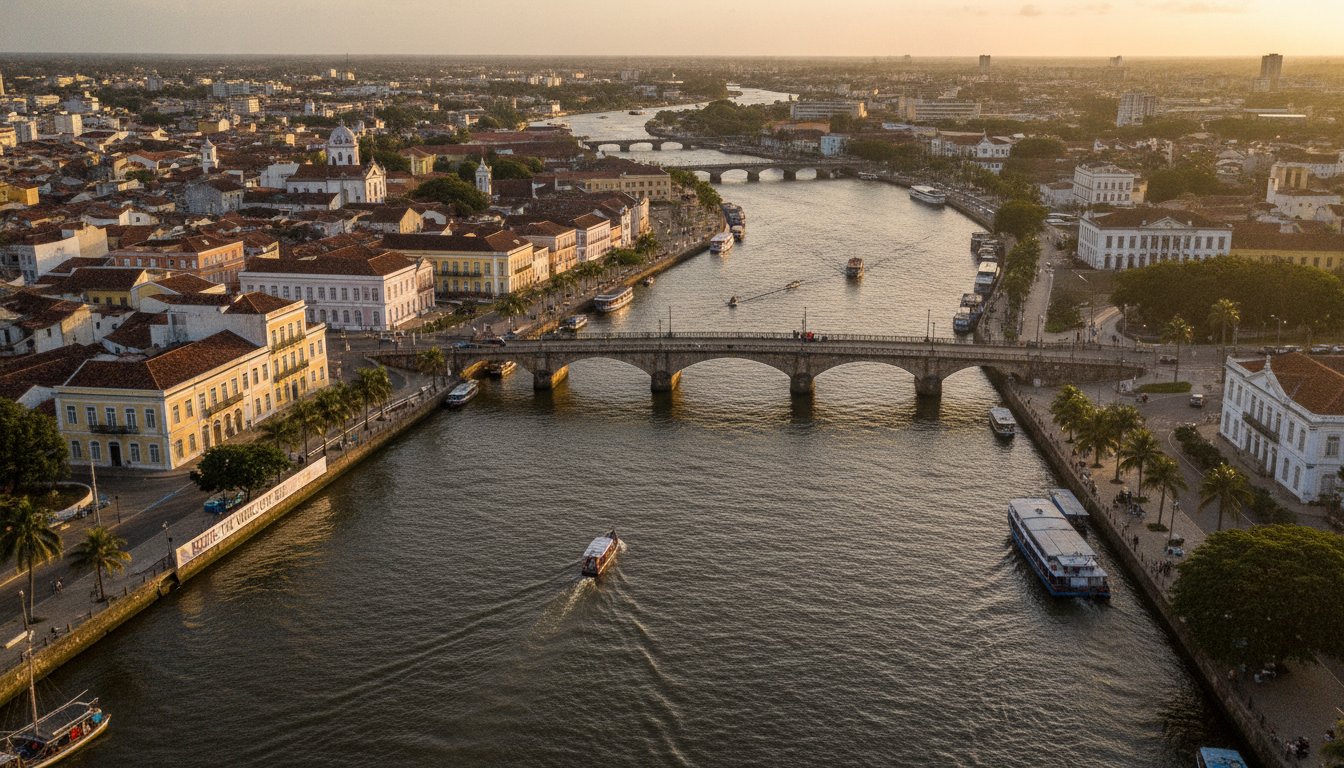
A Geografia Única de Recife
Primeiramente, Recife foi fundada em 1537 em um local estratégico onde dois rios (Capibaribe e Beberibe) encontram o Oceano Atlântico. Essa geografia, inclusive, criou uma cidade dividida por águas, com bairros interligados por pontes e canais. Além disso, os manguezais que cercam a cidade são ecossistemas únicos que abrigam centenas de espécies de aves, peixes e crustáceos.
Os Rios de Recife
- Rio Capibaribe: O rio principal, que nasce no Agreste e deságua no Oceano em Recife. Atravessa a cidade de leste a oeste
- Rio Beberibe: Nasce na Mata Sul e deságua na foz do Capibaribe, formando o porto natural
- Rio Jordão: Canal que separa Ilha do Leite de Santo Amaro
- Rio Pina: Rio menor que banha bairros da zona sul
As Pontes Icônicas
Sem dúvida, Recife tem mais de 40 pontes que ligam seus bairros. Algumas, aliás, são verdadeiras obras de arte:
Ponte Estaiada
Inaugurada em 2009, atualmente é a ponte estaiada mais longa do Brasil. Com 540 metros de extensão, ela liga o bairro de Santo Amaro à Barra de Jangada. À noite, iluminada, é, inclusive, um dos cartões-postais mais fotografados da cidade.
Ponte do Entroncamento
Aliás, é uma ponte histórica que liga o Recife Antigo ao bairro de Santo Amaro. Foi palco de batalhas, por exemplo, durante a Insurreição Pernambucana de 1817 e tem um valor histórico enorme para a cidade.
Ponte da Capibaribe
Certamente, é a ponte mais movimentada da cidade, que cruza o Rio Capibaribe e liga o centro à zona oeste. Afinal, o tráfego intenso durante o rush mostra a importância vital dessa ponte para a mobilidade urbana.
Onde Conhecer os Rios de Recife
Passeio de Barco pelo Rio Capibaribe
Diversas operadoras, por exemplo, oferecem passeios de barco pelos rios de Recife. Geralmente, o percurso passa por manguezais, pontes históricas e bairros ribeirinhos. Duração: 1-2 horas. Atualmente, o preço é de R$ 80-150 por pessoa. Em geral, a saída é do Marco Zero ou do Recife Antigo.
Parque dos Manguezais
O Parque dos Manguezais é, com toda a certeza, uma reserva ecológica no coração de Recife. Oferece, por exemplo, trilhas guiadas, observação de aves e contato direto com o ecossistema de manguezal. Entrada gratuita. Funcionamento: terça a domingo, das 8h às 16h.
Ilha do Leite e Ilha de Santo Amaro
Da mesma forma, as duas ilhas principais de Recife são banhadas pelos rios Capibaribe e Jordão. Em seguida, caminhe pela orla, visite o Teatro de Santa Isabel e aproveite a vista dos rios cruzando a cidade.
Recife Antigo
Além disso, o centro histórico foi construído em uma península cercada por água. As ruas estreitas e casarões coloniais dão ao bairro um charme europeu. Por exemplo, a Rua do Bom Jesus, com suas lojas e restaurantes, é a via mais famosa.
A Conexão com Veneza
No entanto, a comparação com Veneza não é apenas pela presença da água. Recife tem, por exemplo, uma história de imigração italiana que trouxe influências culturais europeias para a cidade. Ademais, os canais artificiais construídos durante o período holandês (1630-1654) lembram os canais de Veneza, e a ponte que liga o Recife Antigo à Ilha de Santo Amaro foi inspirada em pontes europeias.
Apesar de ser uma comparação bonita, é importante notar que Recife tem sua própria identidade. Ou seja, a “Veneza Brasileira” não é uma cópia de Veneza – é uma cidade única com uma relação singular com a água.
Roteiro: Um Dia nos Rios de Recife
Manhã: Marco Zero e Recife Antigo
Em primeiro lugar, comece pelo Marco Zero, o coração de Recife. Em seguida, visite o Parque das Esculturas de Francisco Brennand e caminhe pelo Recife Antigo. Observe as pontes e canais ao redor.
Almoço: Mercado de São José
Então, almoce no Mercado de São José, o mais antigo de Recife. Comida típica e vista para o rio.
Tarde: Passeio de Barco
Enfim, faça um passeio de barco pelo Rio Capibaribe. Visite os manguezais e observe a avifauna.
Noite: Orla de Boa Viagem
Por fim, termine o dia na Avenida Boa Viagem, com vista para o oceano. Jantar em restaurante na beira da praia.
Em suma, para mais roteiros, consulte nosso roteiro de 5 dias em Recife.
Perguntas Frequentes
Por que Recife é chamada de Veneza Brasileira?
Por seus rios, canais e pontes que cruzam a cidade, criando uma paisagem similar à italiana.
Dá para fazer passeio de barco em Recife?
Sim, diversas operadoras, por exemplo, oferecem passeios pelos rios e manguezais.
Os rios de Recife são poluídos?
Alguns trechos têm problemas de poluição, mas os manguezais são preservados e são ecossistemas saudáveis.
Quais pontes são mais bonitas?
A Ponte Estaiada (moderna) e a Ponte do Entroncamento (histórica), inclusive, são as mais fotogênicas.