Recife & Olinda: The Dutch Legacy and Baroque Dreams of Brazil’s Northeast
Gabriel Oliveira
Facebook
WhatsApp
X
Threads
Pinterest
Contents
While much of South America’s colonial history is a monochrome tale of Spanish or Portuguese rule, Pernambuco offers a vibrant, polyglot exception. For twenty-four years in the 1600s, this wasn’t just Brazil; it was New Holland.
To walk through Recife and Olinda today is to witness a “Baroque Dream”—a place where European high art was forced to adapt to the heat, the light, and the sugar-fueled wealth of the New World.
1. The “Mauritsstad” Vision: A Dutch Utopia in the Tropics
When Count Maurice of Nassau arrived in 1637, he didn’t just want a colony; he wanted a masterpiece. He brought with him a retinue of scientists, mapmakers, and artists like Frans Post and Albert Eckhout, who were the first to realistically depict the Americas for a European audience.
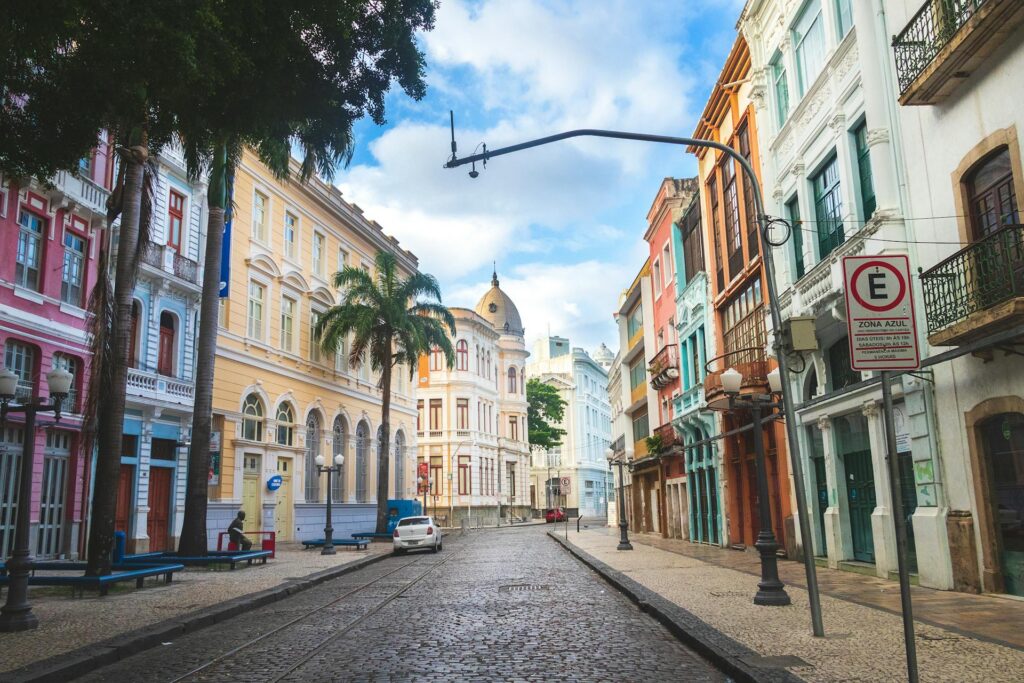
The First Urban Planning: Before New York had its grid, Nassau was planning Mauritsstad (modern-day Recife). He demanded paved streets, drainage systems, and the first botanical garden and zoo in the Americas.
Scientific Frontiers: For the British traveler, it’s fascinating to note that the first astronomical observatory in the Southern Hemisphere was built right here, decades before many European capitals had their own.
Rua do Bom Jesus no centro do Recife. Foto de Victor Cayke no Pexels
2. The Golden Chapel: Baroque Opulence Unleashed
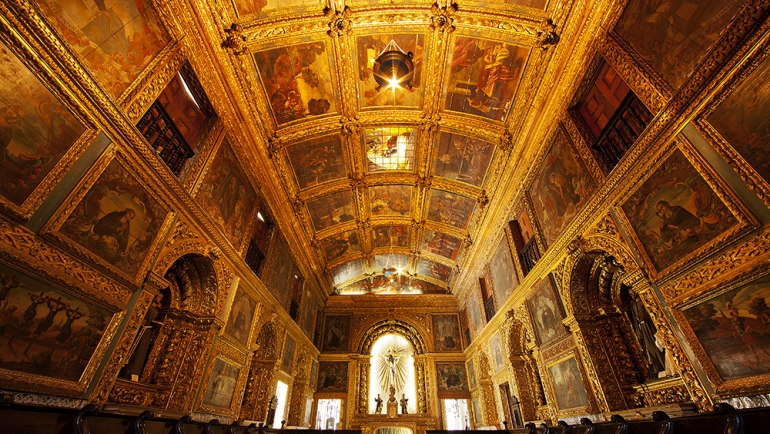
If the Dutch were about order and science, the Portuguese—upon reclaiming the land—were about divine theatricality. This is best seen in the Capela Dourada (Golden Chapel) in Recife.
For a traveler from the US or UK, where religious architecture is often more restrained, the Golden Chapel is a sensory overload. Every square inch of the interior is covered in cedar wood carvings plated in 22-carat gold. It is the pinnacle of the “Baroque Dream,” designed to awe the spectator into a state of spiritual ecstasy.
Tip for History Buffs: Look closely at the paintings on the ceiling; they depict the Franciscan martyrs, but the background flora and fauna are distinctly Northeastern Brazilian, showing the “tropicalization” of European art.
A Capela Dourada é consagrada como um dos monumentos barrocos mais importantes do Brasil. (Foto: Sol pulquério/PCR)
3. Olinda: The Slumbering Giant of the Hills
While Recife looked toward the future, Olinda remained a preserved monument to the past. After being burned by the Dutch in 1631, the city was rebuilt with a vengeance by the Portuguese, resulting in one of the most harmonious colonial landscapes in the world.
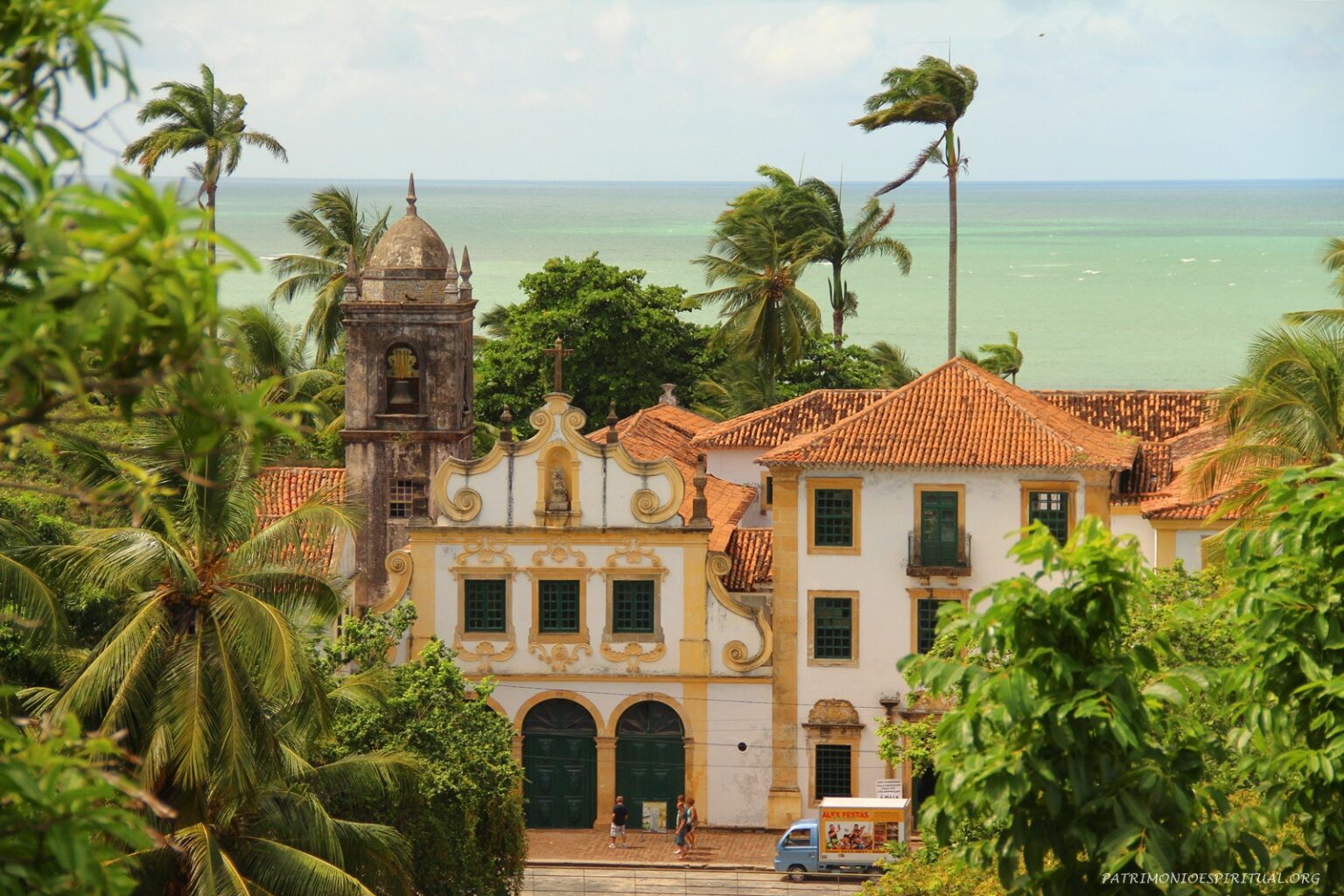
The Monastery of São Bento: This is where the Baroque becomes “monumental.” The main altar is a towering masterpiece of gold and carving so significant that it was dismantled and shipped to the Guggenheim Museum in New York for an exhibition in 2001 before being returned.
The Convent of San Francisco: Famous for its azulejos (blue and white hand-painted tiles). These tiles tell stories not just of the Bible, but of the daily life and flora of the colonial period.
4. The War of the Divine: A Clash of Civilizations
The transition from Dutch to Portuguese rule wasn’t just a change in flags; it was a religious and social upheaval. This period, known as the Pernambucan Insurrection, is what gave the people of this region their fiercely independent spirit.
Monte dos Guararapes: Located just south of the city, this is the “Waterloo” of Brazil. It’s where the Luso-Brazilian forces finally defeated the Dutch. For American tourists, the site is reminiscent of a Revolutionary War battlefield, complete with a historic church and a panoramic view of the coastline where the Dutch fleets once loomed.
5. Practical Insights: Navigating the “History Trail”
To truly appreciate the Dutch and Baroque legacy, a traveler needs to move between the islands of Recife and the hills of Olinda.
The Best Time for Photos: For Olinda, arrive at 8:00 AM. The morning light hits the facades of the churches perfectly, and you’ll avoid the humidity of the afternoon.
Safety Context: While the historical sites in Olinda are generally safe and well-patrolled, stick to the main “tourist loop” (Rua do Amparo, Alto da Sé). If you see a deserted, narrow alleyway, it’s best to stay on the main path.
Guided Tours: For US/UK visitors, hiring a private, English-speaking historian is highly recommended. The layers of Dutch vs. Portuguese history are dense, and having someone point out the specific “Nassau-era” stones in a wall makes the experience 10x more rewarding.
A Living Museum of the Atlantic World
The story of Recife and Olinda is not merely a chapter in a history book; it is an immersive experience that challenges the standard “tropical” stereotype of Brazil. For the traveler coming from the US or the UK, it offers a rare opportunity to see where the mercantile pragmatism of Northern Europe collided with the religious fervor of the Southern Mediterranean.
Walking these streets, you aren’t just a tourist; you are a witness to the “Baroque Dream” that survived wars, fires, and centuries of change. By respecting the local pace, hiring knowledgeable guides, and keeping a watchful eye on your surroundings, you can safely unlock a side of South America that feels both ancient and remarkably alive. Recife and Olinda prove that while the sun and sand are beautiful, it is the layers of history beneath the cobblestones that truly make a destination unforgettable.
Início » Recife & Olinda: The Dutch Legacy and Baroque Dreams of Brazil’s Northeast
Gabriel Oliveira
UX Designer e apaixonado por viagens e em fortalecer o turismo na minha região.